Landing Page Design That Converts Houston Visitors into Leads
'Near me' searches have grown over 150% in the past five years nationally, and Houston businesses are capturing a growing share of that intent. A landing page built for conversion is what determines whether that traffic becomes a lead or a lost click. Generic web pages with unfocused copy, slow load times, and no clear call to action bleed revenue quietly. The difference between a page that converts and one that doesn't is rarely one big flaw; it's usually five small, fixable ones.


What Makes a Landing Page Different from a Regular Web Page
A landing page has one job. It exists to move a specific visitor toward a single action: calling your office, submitting a form, booking a consultation, or requesting a quote. Standard website pages serve navigation, branding, and education simultaneously. A landing page strips all of that away and focuses every element on conversion.
Houston businesses that run paid search campaigns or local SEO pushes without purpose-built landing pages are essentially paying for traffic and sending it nowhere useful. A well-designed page removes decision friction by presenting the right message, the right proof, and the right call to action in a logical sequence.
The Core Elements of a High-Converting Landing Page
A Headline That Earns the Next Sentence
Your headline is the first thing a visitor reads and the last thing many will read if it fails. It must connect directly to what the visitor searched or clicked. A Houston HVAC company that runs an ad for 'same-day AC repair' needs a headline that confirms same-day availability, not a generic welcome message. Specificity builds trust faster than any design element.
Keep headlines under 10 words where possible. Use outcome language: what the visitor gets, not what your company does.
A Single, Visible Call to Action
Every landing page needs one primary call to action, repeated at logical intervals as the visitor scrolls. Two competing CTAs, such as 'Call Now' and 'Download Our Brochure,' split attention and reduce overall conversion. Pick the action that is most valuable to your business and design the entire page around it.
Button copy matters more than most designers admit. 'Get My Free Quote' outperforms 'Submit' on nearly every test because it reminds the visitor what they're getting, not what they're doing.
Social Proof Placed at the Point of Hesitation
Reviews, testimonials, and case study snippets should appear near your call to action, not buried at the bottom of the page. Houston buyers researching a local vendor want to see that others in their position made the same choice and got results. Businesses with 50 or more Google reviews see significantly higher local visibility, and that review content can be repurposed directly into landing page copy.
Use real names, real photos where available, and specific outcomes. 'Response time was under two hours' is more persuasive than 'Great service!'
Form Design That Doesn't Intimidate
Ask for the minimum information you need to start a conversation. For most Houston service businesses, that's a name, phone number, and one qualifying question. Every additional field you add reduces form completions. A three-field form consistently outperforms a seven-field form even when the audience is identical.
If your sales process genuinely requires detailed intake information, consider a two-step approach: collect name and contact info first, then ask the qualifying questions on the thank-you page or over the phone.
Mobile Performance Is Not Optional
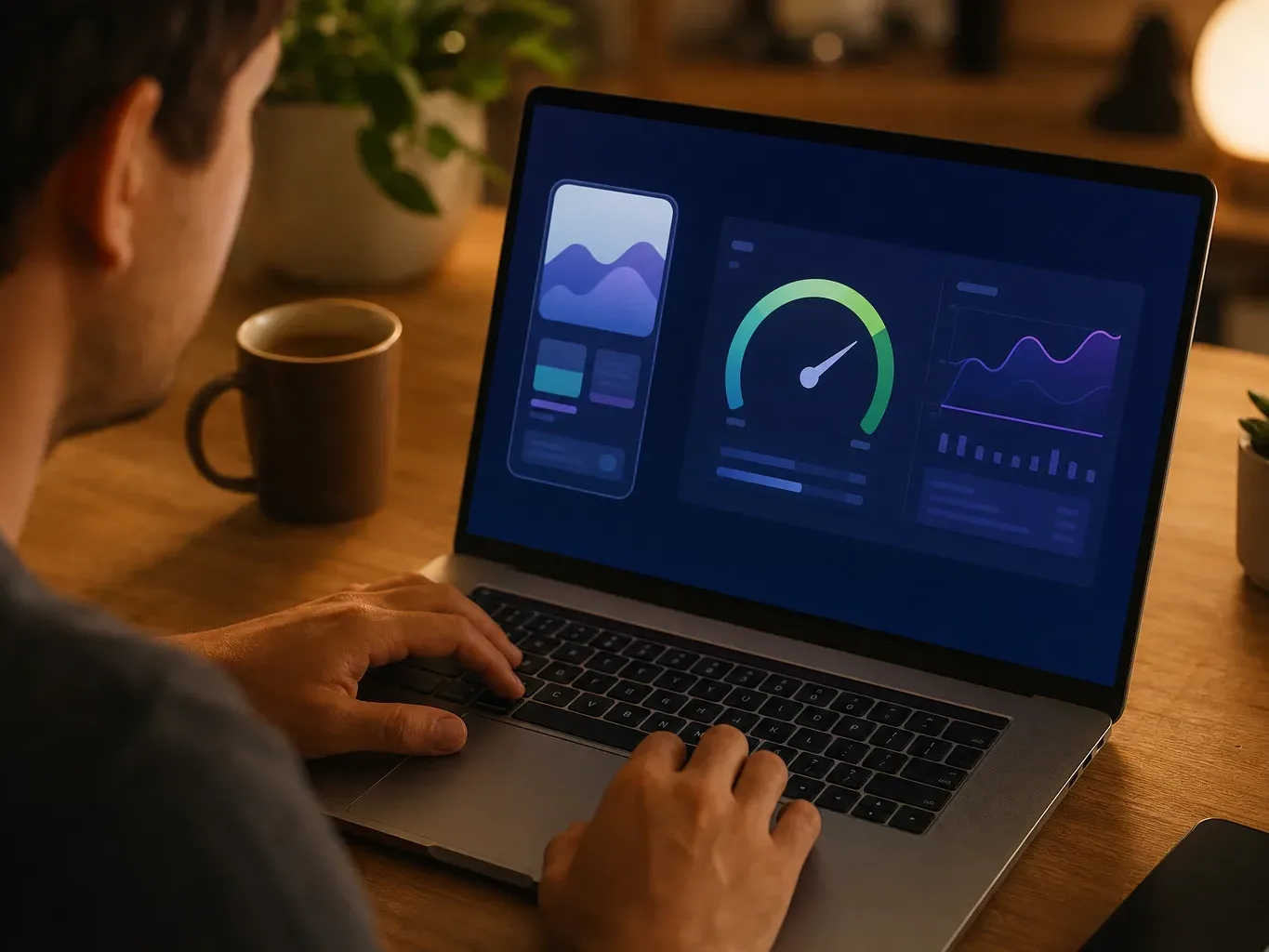
More than 60% of local search traffic in Houston, TX comes from mobile devices. A page designed primarily for desktop is already ignoring the majority of your audience. Mobile-optimized landing pages load quickly, have tap-friendly buttons, display forms without horizontal scrolling, and place the CTA above the fold on a phone screen.
Page speed directly affects your bottom line. A one-second delay in load time can reduce conversions by up to 7%. For a page generating consistent lead volume, that's a measurable revenue gap. Compress images, minimize third-party scripts, and test your page on a mid-range Android device, not just a desktop browser.
What Does Landing Page Design Cost in Houston
A standalone, conversion-focused landing page from a qualified Houston digital agency typically runs $500–$2,500 per page. The range reflects how much custom work is involved: original copywriting, custom graphic design, and A/B testing setup all move the price toward the upper end.
Projects at the lower end of that range usually involve a proven template adapted to your brand and offer. Projects at the upper end involve original design from scratch, integrated CRM connections, and built-in tracking through Google Tag Manager and Analytics. Neither is inherently better; the right choice depends on your campaign volume and the revenue value of each lead.
If you're running paid search, allocate budget for the page alongside your ad spend. Sending $3,000 per month in Google Ads to a weak page is a faster way to waste money than almost any other marketing decision.

A/B Testing and Ongoing Optimization
A landing page is not a one-time deliverable. The initial build is a hypothesis: this headline, this layout, this CTA will convert this audience. Testing validates or disproves that hypothesis with real data.
Start with one variable at a time. Test headline variants before changing button color. Test button copy before rearranging the page layout. Even a modest Houston campaign generating 300–500 monthly visitors has enough traffic to reach statistical significance within four to six weeks on a single variable.
Document every test and its outcome. Over six months, you'll build a conversion playbook specific to your audience that no competitor can replicate from a template.

Local Relevance as a Conversion Signal
Houston visitors respond to pages that acknowledge where they are. Mentioning specific service areas, citing local landmarks as reference points, or using Houston-specific photography signals that your business actually serves this market. It's a trust cue that generic national brands can't easily match.
For businesses serving distinct Houston neighborhoods like Midtown, The Woodlands, or Sugar Land, consider building individual landing pages for each area rather than relying on a single generic page. Geographic relevance strengthens both conversion rates and local SEO performance simultaneously.
Connecting Landing Pages to Your Broader Marketing Stack
A landing page that isn't connected to your CRM, email platform, or call tracking is a page that generates leads you can't measure or follow up efficiently. At minimum, every lead capture form should trigger an automated confirmation email and log the submission to a contact database. Call tracking numbers let you attribute phone leads to specific pages and campaigns.
Reputation management also ties into this ecosystem. Leads who convert become customers, and customers who have a great experience are candidates for review requests. Responding to those Google Business Profile and Yelp reviews within 24–48 hours reinforces the credibility that your landing page worked to establish. The landing page is the entry point to a cycle, not a standalone asset.

Frequently Asked Questions
How Much Does Landing Page Design Cost for a Houston Business?
A conversion-focused landing page from a Houston digital agency typically costs $500–$2,500 per page. Template-based builds with light customization sit at the lower end, while pages requiring original copywriting, custom design, CRM integration, and A/B testing setup trend toward $2,500.
How Many Calls to Action Should a Landing Page Have?
One primary call to action, repeated at logical scroll points. Multiple competing CTAs split visitor attention and reduce overall conversion rates. Choose the single action most valuable to your business and build every page element around driving the visitor toward it.
Why Does Mobile Optimization Matter So Much for Houston Landing Pages?
More than 60% of local search traffic in Houston, TX comes from mobile devices, so a page that performs poorly on a smartphone is already failing the majority of your audience. A one-second delay in load time can reduce conversions by up to 7%, making speed a direct revenue factor.
How Long Does It Take to See Results from A/B Testing a Landing Page?
A Houston campaign generating 300–500 monthly visitors typically reaches statistical significance on a single variable within four to six weeks. Testing one element at a time, such as the headline before the button copy, produces cleaner data and actionable conclusions faster.
Should Houston Businesses Build Separate Landing Pages for Different Neighborhoods?
Yes, for businesses serving distinct areas like The Woodlands, Midtown, or Sugar Land, individual landing pages for each location outperform a single generic page. Geographic specificity functions as a trust signal for local visitors and supports local SEO performance at the same time.